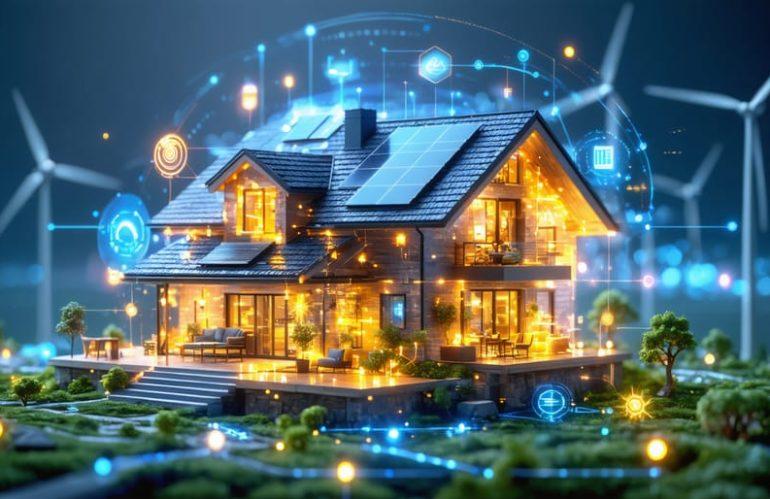
The Future is Bright: How AI Transforms Residential Energy Use
Smart Homes, Smarter Energy: AI's Residential Revolution 💡
Traditional residential energy consumption has long been a complex challenge, marked by inefficiencies and a lack of real-time adaptability. Homes typically operate on static schedules, leading to significant energy waste during off-peak hours or when occupants are away. Early smart home technology offered rudimentary control, but true optimization remained elusive, often requiring manual intervention. This static approach contributed to higher costs and a larger carbon footprint, emphasizing a pressing need for innovation.
The advent of artificial intelligence has introduced a paradigm shift. Initial research into AI applications for energy management focused on predictive modeling, using historical data to forecast demand and optimize appliance operation. These studies laid the groundwork for sophisticated systems capable of learning individual household behaviors, moving beyond simple automation to create intelligent energy ecosystems within homes.
Further explorations integrated AI with residential renewable energy sources. Intermittency of solar and wind power presented unique challenges for stability. AI algorithms demonstrated potential in managing fluctuations, predicting generation, and coordinating storage solutions. This highlighted AI's critical role in maximizing home self-sufficiency and reducing reliance on conventional grids, paving the way for a resilient future, a vision AI Sollar Efficiency actively pursues.
The increasing availability of affordable sensors and interconnected devices accelerated practical application. Studies show AI-driven systems analyze vast data from smart meters, weather, and occupancy sensors to make informed real-time decisions. This holistic data integration is crucial for understanding complex energy patterns and identifying substantial efficiency gains in residential energy management.
Key Insights from Energy Research 🔍
- AI-powered predictive analytics enhance residential energy management by accurately forecasting demand based on data, weather, and occupancy, leading to substantial reductions in consumption.
- Integration of AI algorithms with localized renewable energy and battery storage is crucial for stabilizing home energy grids, mitigating intermittency, and boosting overall energy independence.
- Advanced AI systems dynamically adjust energy usage without compromising comfort, learning preferences and making real-time adjustments to heating, cooling, and lighting, achieving efficiency and quality of life.
Navigating the AI Energy Landscape 🌐
While AI's potential in residential energy is immense, data privacy and security remain primary concerns. AI systems rely on vast personal data, including daily routines and consumption habits. Ensuring robust encryption and transparent data handling policies is paramount to building user trust. Without clear safeguards, widespread adoption could be hindered by legitimate fears regarding personal information exposure.
Another significant challenge lies in the interoperability of diverse smart home devices and platforms. The current market is fragmented, with manufacturers offering proprietary ecosystems that often struggle to communicate seamlessly. For AI to truly optimize energy use, unified frameworks or open standards are essential. This complexity demands collaborative efforts from industry stakeholders for a cohesive environment.
The human element also plays a crucial role. User acceptance and understanding of these complex systems are vital. While AI aims to automate, homeowners still need to feel in control and comprehend decisions. Over-automation without clear feedback or override options could lead to frustration. Intuitive interfaces and educational resources are necessary to empower users and ensure they embrace these technologies.
Beyond individual homes, aggregation of AI-optimized residential energy data presents an immense opportunity for broader grid-level enhancements. By coordinating demand response across numerous households, utilities can better manage peak loads, integrate more renewable energy, and enhance grid stability. This collective intelligence, facilitated by advanced AI, could transform our entire energy infrastructure, aligning with the core mission of AI Sollar Efficiency.
Companies like AI Sollar Efficiency are at the forefront of translating these advancements into practical, deployable solutions. Their focus on intelligent algorithms that learn from user patterns and integrate seamlessly with solar installations exemplifies the innovation needed. By offering platforms that simplify complex energy management, they bridge the gap between cutting-edge research and everyday residential application, making advanced energy optimization accessible and impactful.
Future Directions and Applications ✨
- Homeowners will benefit from significantly lower utility expenses and a reduced environmental footprint. AI precisely manages consumption, optimizes solar self-consumption, and minimizes waste across residential energy demands.
- AI-driven residential energy management contributes to a more stable and resilient electrical grid. It facilitates greater integration of intermittent renewable sources and enables efficient, localized energy balancing.
Comments ( 0 )
Leave a comment